


Top Mount vs Front Mount Intercooler – which one is the best for you?
Top Mount vs Front Mount Intercoolers
You might not be very happy as your numb, frozen hands turn on the demister on a frosty winter’s morning, but your beloved fourbie’s engine is. Gulping in crisp-cold oxygen-dense air, it can perform at its best, especially if it’s boosted. The decades-old debate continues to rage on the best way to keep intake temps down for better performance. A major point of contention is the location of the intercooler.
So, top mounted or front mounted intercooler? If you’ve worked on vehicles you will know, there’s rarely a simple answer (or fix) to anything let alone this hot topic. This topic is even more loaded in the off-road 4×4 world. There are a wider variety of issues to consider on an outback track 4WD than on the road and racetrack.
Let’s explore the pros and cons of both Top Mounted Intercoolers (TMIC) and Front Mounted Intercoolers (FMIC) for 4×4’s. You’ll be better informed when it comes time to upgrade your intercooler.
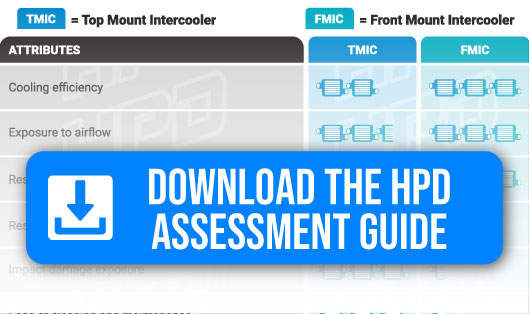
Top Mounted Intercoolers (TMIC)
Need to win the space race?
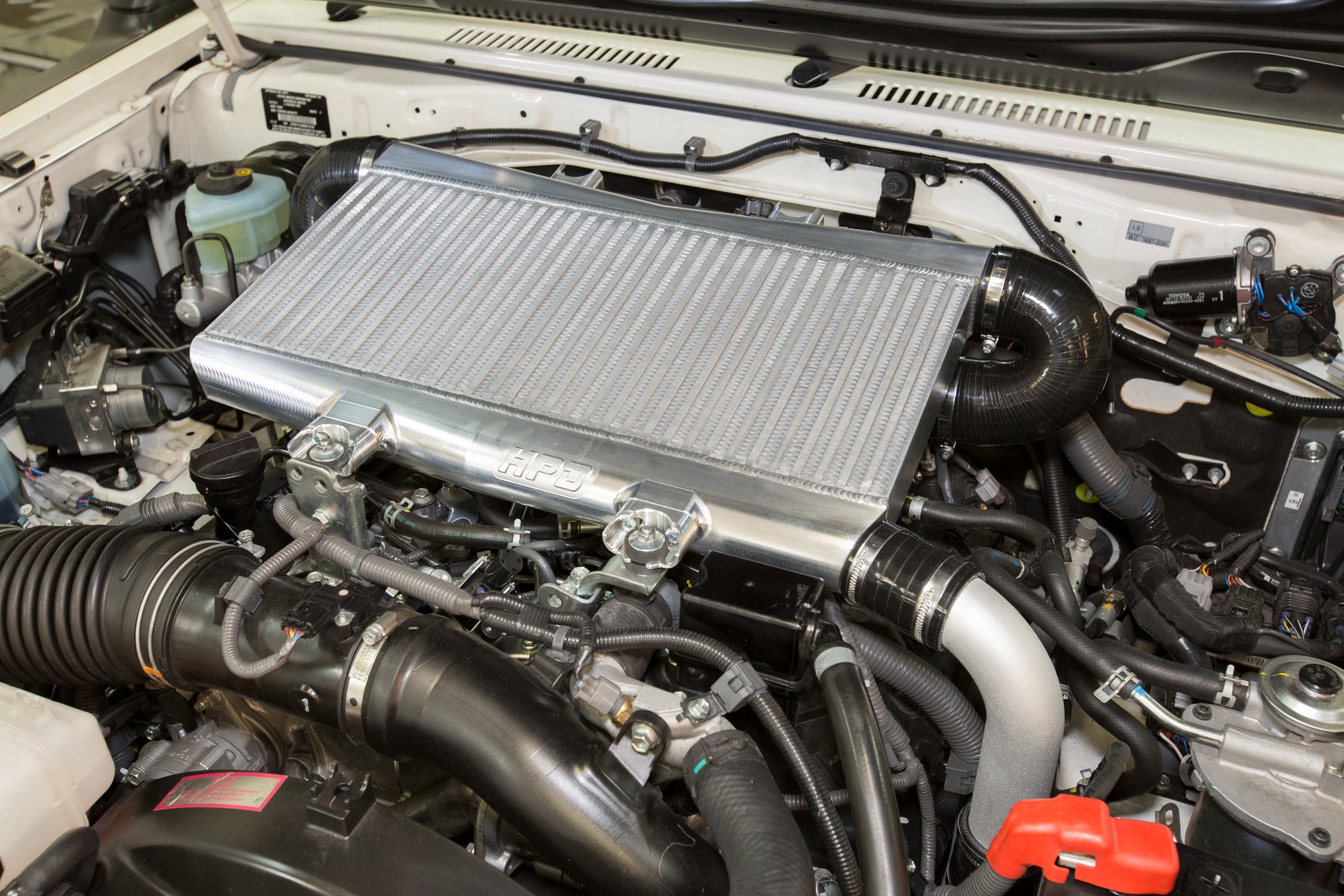
TMIC systems are often used for packaging reasons, where space may be limited in front of the engine. They are positioned well out of the way of most obstacles when off-road driving like plants and rocks as well as airborne debris. When trudging through muddy trails and water crossings, they are unlikely to get clogged with mud and lose efficiency. In the even of a leak developing in the intercooler, an intercooler mounted high is less likey to allow water to get sucked into the intake system and ‘hydraulic’ the motor.
Waiting for a quick response
With the intercooler fitted close to the intake system, much less pipe work is required. This means less joins that can leak and shake loose. Shorter piping means (with the correct diameter tubing) better throttle response and less turbo lag.
No obstruction
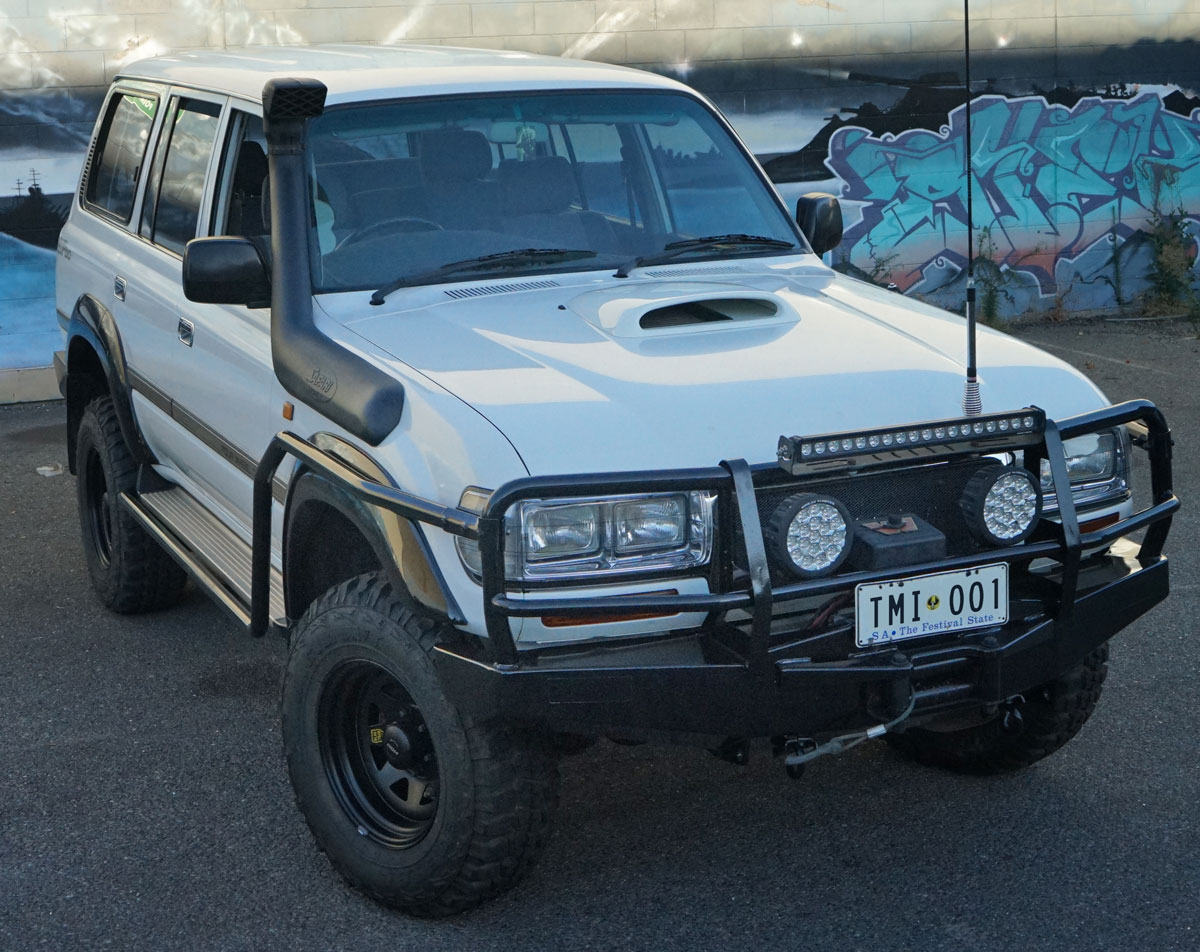
The location of TMICs don’t obstruct vital airflow to important heat exchangers at the front of the vehicle. TIMCs won’t block airflow to radiators, air conditioning condensers and other ancillary cooling parts like oil coolers.
TMICs are in turn unaffected by obstructed airflow by winches and additional lights fitted to the front of the vehicle.
A cool part TMICs need to achieve cooling is a bonnet scoop, directing air to the intercooler while making your rig look tougher and more aggressive.
So what’s not to like?
For a part that’s primary purpose is to provide cooling, putting it above a hot motor at the top of a scorching hot engine bay is far from ideal. Highly prone to heat soak, bonnet scoops and electric fans are required to increase efficiency. Though they look tough, bonnet scoops don’t allow as much airflow to the intercooler (due to visibility and regulatory reasons) as the grille or air intakes at the front of a vehicle.
When size matters
Generally (but not always), the bigger the intercooler core, the better the cooling performance. Due to the size constraints of being crammed in between the top of the engine and the bonnet, TIMCs can’t be as large as some front mounted intercooler cores.
Get to know your fans
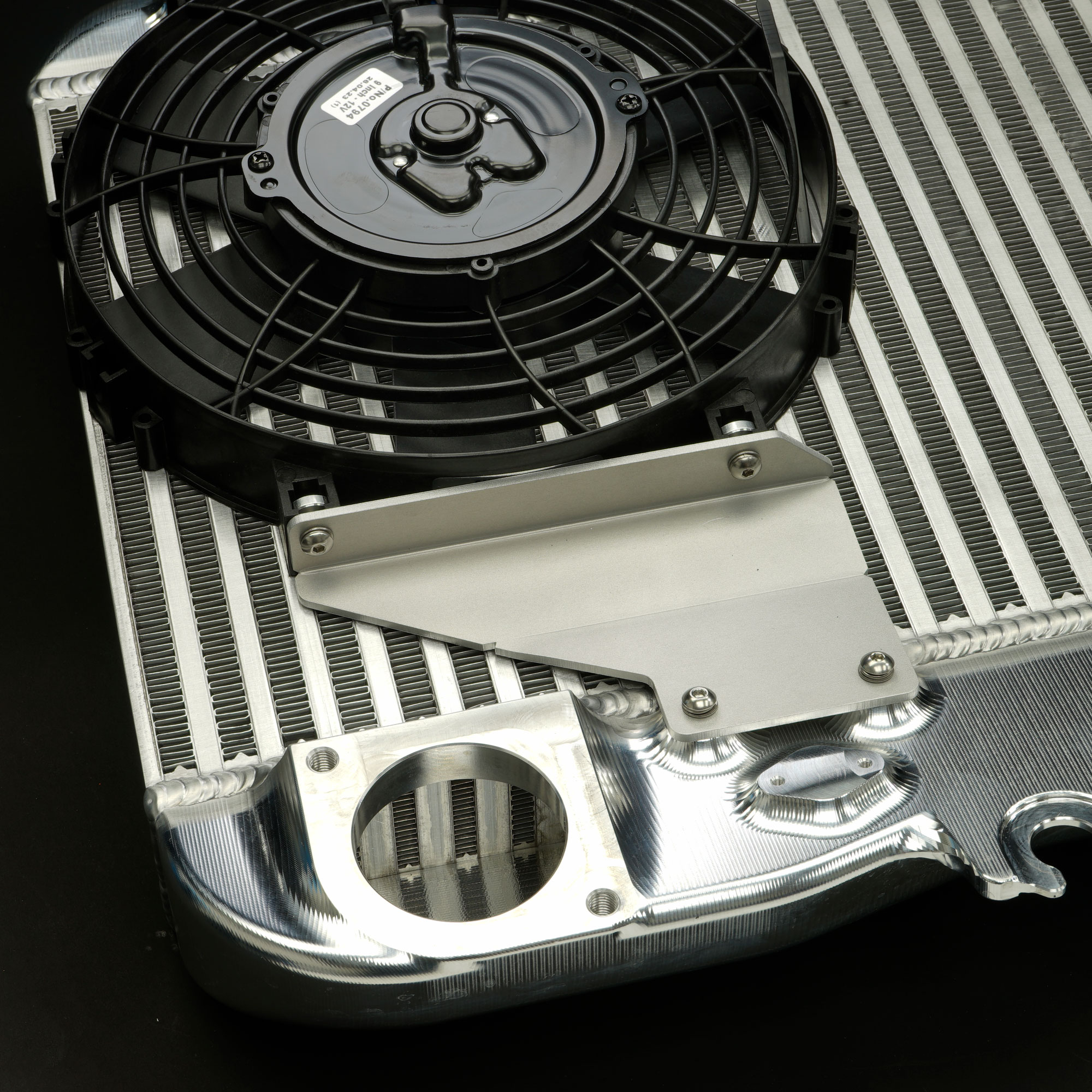
Due to compromises in packaging and heat exposure, to achieve the optimal cooling performance from TMICs an electric fan is required. With space already at a premium, your fan choice needs to be compact as well as high performing.
A high-performance thermo fan is highly recommended to draw cooler ambient air from the bonnet scoop, through the intercooler core. This is especially important to reduce charge air temperatures more effectively during difficult off-road driving at crawling speeds.
Front Mounted Intercoolers (FMIC)


No cooler place to be
Enjoy the wind in your face? Intercoolers do. There is nowhere better for a heat exchanger to be than right up front where there’s a steady flow of cooler ambient air. Not only is there plenty of air flow (in most situations), there’s also more freedom to create extra space to fit large intercoolers with significant frontal area and core thickness for optimal cooling.
Mounting your intercooler up front away from the engine bay’s heat also means less heat soak compared to a top mounted intercooler, even at low speeds.
For low airflow situations during slow, challenging off-road driving, bigger cores can accommodate bigger thermo fans with larger diameters and thicknesses, drawing plenty of cooler air from outside the vehicle, through the intercooler core.
What could possibly go wrong?
Not many will argue the fact that utilising FMIC’s are the most effective way to reduce charge air temps in most instances. However, here are the issues to be aware of with this configuration.
The location of accessories such as lights and winches need to be considered, as they can obstruct airflow to FMICs.
As it’s fitted further from the turbo and intake manifold, extra pipes and joins are required to route the charged air. This creates an increased chance of failure points developing where boost pressure can be lost, especially after many rough journeys.
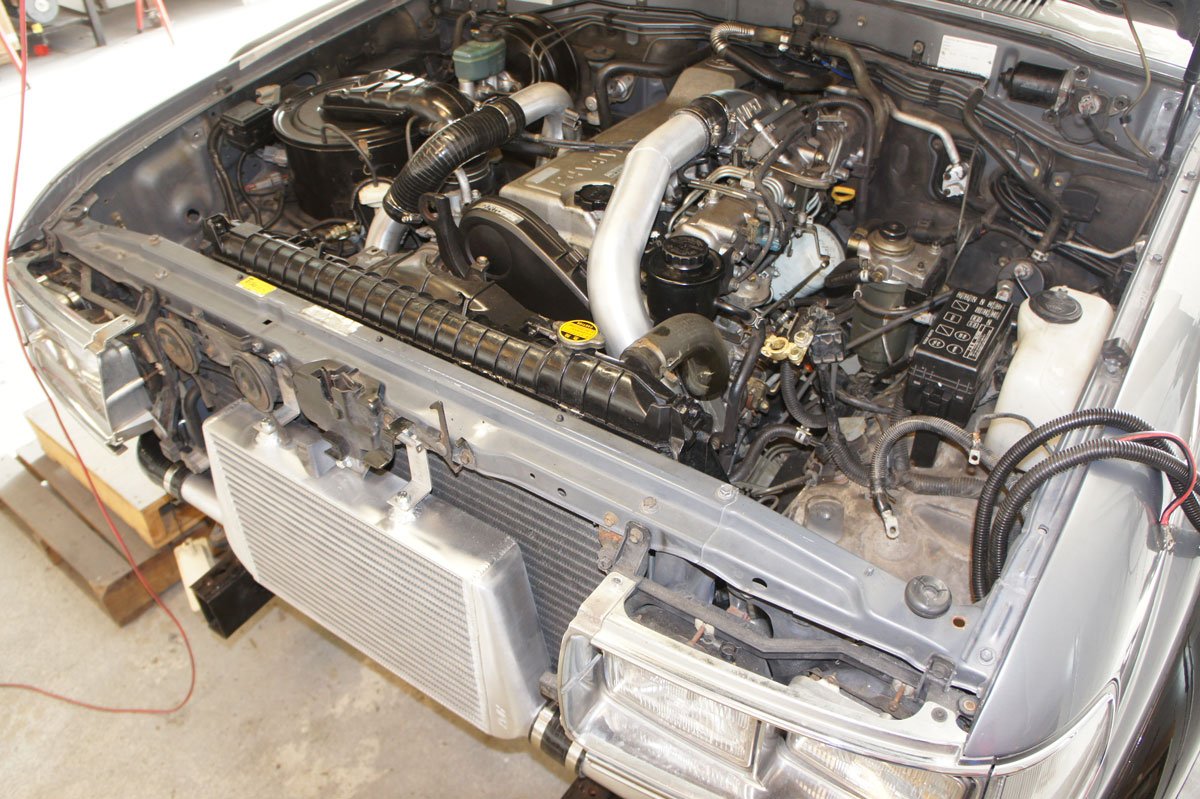
FMIC systems are generally not as simple to fit as TMIC. Thye sometimes requiring significant modifications to accommodate large intercoolers and route pipework. Extra piping length can also slow throttle response and increase turbo lag.
In the frontline

It’s location at the front of the vehicle obstructs some air flow to other heat exchangers such as radiator and air conditioning condenser. If this alone is making you rule out fitting a front mounted system, consider this fact: If you make a significant reduction in charge air temperature, you will reduce engine temperatures. This in turn means the radiator has less cooling to do.
Being at the leading edge of the car also places it at higher risk of impact damage from debris. Things like plants, rocks and wildlife are more likely to damage FMICs than TMICs. They’re also more prone to clogging from mud, plants and seeds. Clogged intercoolers have reduced efficiency plus require laborious cleaning.
Bash protection should be provided to FMIC components or placed in protected areas of the vehicle. If the system sustains damage and cracking or pipe disconnection coccurs, water can enter. Water could get sucked into the intake manifold, leading to engine failure.
CONCLUSIONS
So, which is better, TMIC or FMIC? The answer really depends on what you are going to use your 4×4 vehicle for. Most 4×4 vehicles do the majority of their work on public roads, touring on highways, major dirt roads and beaches, with the occasional slow-speed off-road work. For these applications, a front mounted system will provide the best way to keep intake temperatures down.
For vehicles that spend plenty of time crawling through remote, rugged outback tracks with regular water crossings, maybe chasing wild pigs and cattle up north, a top mounted intercooler system is the one to consider.
The points above are of course heavy generalisations, and there really isn’t a wrong answer. HPD have TMIC and FMIC kits available, but not every model has a choice of both. One thing’s for sure; no matter which HPD intercooler kit you choose, it will provide better intake temperature reductions than an OE system and they are designed and tested for maximum durability and ease of installation.