


EGR Blocker Solutions: Restoring Airflow and Reliability in Australian Turbo-Diesels
Most factory diesels were never built for Australian conditions. Add a loaded canopy, forty-degree heat and dirt roads, and the intake loses ground fast.
The EGR system is usually where trouble starts. It bleeds exhaust gas back into the intake to cool combustion and cut emissions. That works on a test bench. Out on the Birdsville Track, that gas carries fine soot into the manifold, where it mixes with crankcase oil vapour and builds into sludge that chokes airflow.
Drivers feel it before they can name it. Throttle response softens, EGTs climb under load, and service intervals shrink. This article covers what is happening inside that intake and why a properly built EGR BLOCKER fixes the cause, not the symptom.
| TABLE OF CONTENTS |
The Reality of Modern Turbo-Diesels
Australian conditions are brutal on diesel engines. Dust, heat, and constant load cycles accelerate wear beyond manufacturer test parameters. Long-haul towing, corrugated tracks, and stop-start fleet work increase intake contamination. Factory emissions systems weren’t built for this duty cycle.
Modern turbo-diesels depend on tightly calibrated airflow. Small intake restrictions reduce volumetric efficiency and raise thermal stress under load.
Soot buildup in the intake tract is a common failure point. It starts subtly, then compounds fast.
Most owners notice the symptoms long before they understand the cause. Power loss and rising temperatures are usually the first warning signs.
How the EGR System Impacts Your Engine
The EGR system recirculates exhaust gas back into the intake manifold. This lowers combustion temperatures and reduces NOx emissions by design.
The problem lies in the gas itself. Exhaust carries fine carbon soot, an abrasive byproduct of incomplete combustion under load.
This soot enters the intake tract directly. Over time, it coats manifold walls, intake valves, and charge piping with hardened deposits.
Crankcase ventilation introduces oil vapour into the same airflow path. Combined with soot, this forms a thick, tar-like sludge. This sludge restricts airflow and reduces boost response. The engine works harder to draw the same volume of clean air.
Reduced airflow disrupts air-fuel ratio control. With less fresh oxygen available, the fuel burns less efficiently, drastically raising exhaust gas temperatures (EGTs) and thermal stress under load. Volumetric efficiency drops as a direct result. The cylinder fills with less usable air per cycle, even at full throttle.
Over thousands of kilometres, this compounds. What begins as a thin coating becomes a near-solid restriction inside the manifold. Turbocharger efficiency suffers, too. The compressor side works harder to push air through a progressively narrower, soot-lined intake path.
Heat soak becomes more pronounced under sustained towing. Restricted airflow combined with recirculated hot exhaust gas raises overall system temperature.
Restoring Airflow: The Role of an EGR Blocker
An EGR BLOCKER solves this primarily at the mechanical level, physically isolating the intake manifold from recirculated exhaust gas.
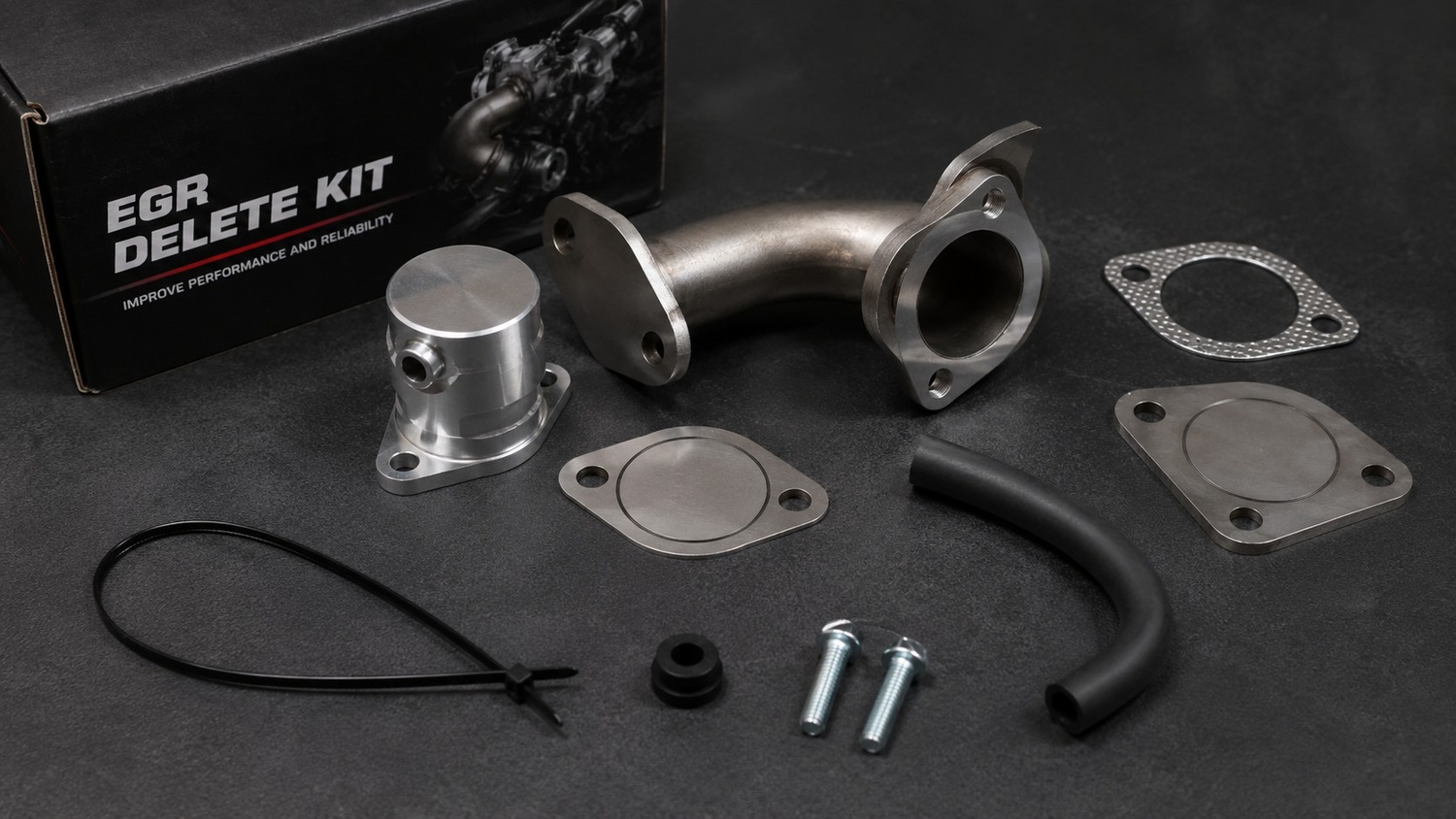
A premium EGR BLOCKER uses a precision-machined block-off plate to seal the EGR passage before soot-laden gas can ever reach the intake.
While software tuning turns off the valve’s operation, combining it with a physical EGR BLOCKER targets the root cause, ensuring an absolute, positive seal that software alone cannot guarantee against a leaking or sticking factory valve.
For owners pursuing EGR system deletions, the EGR BLOCKER is the physical foundation. It complements any EGR delete kit by sealing the path permanently.
A properly engineered EGR delete kit pairs the block-off plate with correct fittings and gaskets. Material quality matters under sustained heat.
Thermal management is critical here. Quality EGR delete kit components use heat-resistant alloys rated for sustained EGT exposure.
This isolates the intake tract from soot long-term. Airflow stays clean and consistent with original engineering intent.
Pairing an EGR BLOCKER with appropriate ECU calibration also matters. This prevents fault codes and keeps fuelling maps accurate.
Core Benefits for Australian Drivers
Removing recirculated exhaust gas from the intake delivers measurable benefits across daily driving and heavy-duty towing applications.
- Crisper throttle response from unrestricted intake airflow
- Lower EGTs under sustained towing or climbing loads
- Cleaner engine oil with reduced soot contamination
- Reduced carbon buildup on intake valves and manifold
- More stable air-fuel ratio across the rev range
- Improved turbo response from consistent charge air quality
- Fewer intake cleaning intervals and less downtime
- Reduced the risk of intake valve carbon lock over time
Engineering Reliability Over Compromise
Long-term reliability depends on clean combustion and consistent airflow. Soot-contaminated intake air undermines both steadily over time.
Premium aftermarket components matter here. A poorly fitted EGR BLOCKER can leak, loosen, or fail under thermal cycling.
HP Diesel treats EGR system deletions as precision engineering, not generic bolt-on modification. Fitment and sealing tolerance both matter.
Clean air delivery supports lower operating temperatures and more predictable turbo behaviour under sustained, heavy load conditions.
For owners running heavy GVM, off-road touring, or fleet duty, mechanical reliability outweighs marginal compliance-only emissions gains.
Material selection also affects longevity. Stainless and billet-grade block-off plates resist warping where lower-grade alternatives eventually fail.
Installation quality matters just as much as part quality. Correct torque, gasket seating, and clearance checks prevent leaks under vibration.
Note that EGR deletion affects ADR emissions compliance. It’s intended for off-road, competition, or non-road-registered applications only.
Always confirm current state and federal regulations before modifying any road-registered vehicle’s emissions systems.
Frequently Asked Questions
What does an EGR blocker physically do?
It seals the EGR passage with a precision plate, stopping exhaust gas recirculation into the intake manifold entirely.
Will an EGR delete kit throw an error code or fault light?
Yes, on modern common-rail diesel engines, the ECU monitors airflow changes closely. To prevent fault codes or “limp mode”, the physical block-off plate must be paired with appropriate ECU calibration.
How does blocking the EGR affect oil contamination?
It significantly reduces soot ingress through crankcase ventilation, keeping engine oil cleaner for longer between services.
What are the performance differences when towing?
Drivers typically notice lower EGTs, steadier boost delivery, and reduced power fade during sustained climbs or heavy loads.
Many also report smoother gear changes under load, as the engine no longer compensates for restricted, soot-laden airflow.
Is the process reversible if circumstances change?
Yes. A block-off plate can be removed, and the original EGR hardware reinstalled, provided the components were stored correctly.